

Table of Contents
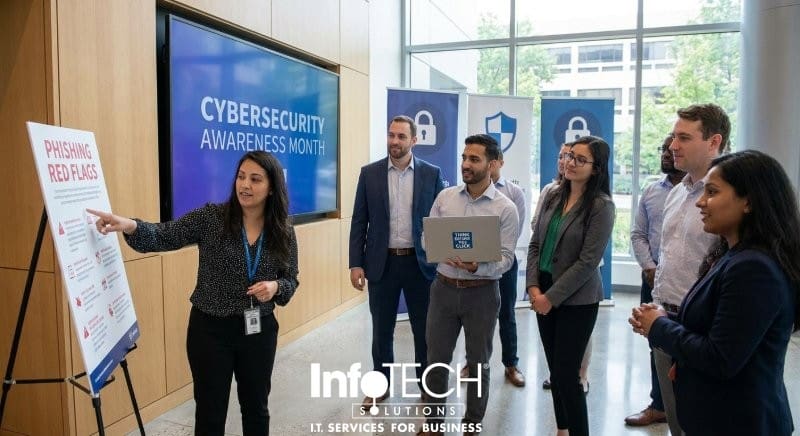
Cybersecurity planning belongs in the same conversation as approvals, remote access, cloud apps, backups, regulated data, and vendor risk. Since 2004, October has been declared cybersecurity awareness month, but the value is not the calendar. It is the chance to confirm whether employee decisions are backed by clear rules, monitored systems, tested recovery steps, and accountable ownership.
From our vCIO and cybersecurity consulting perspective, awareness reduces risk when it becomes documented policies, monitored alerts, tested backups, and better user behavior.
Brian Leger, Co-Founder at infoTECH Solutions, notes: “Awareness becomes useful when leaders can see which users, devices, vendors, and backups create risk, then assign controls that reduce repeat incidents.”
Cybersecurity Awareness Month Should Start With Business Risk
Before assigning tools or training, you need a prioritized view of what is exposed. Human behavior remains a major factor, with the human element involved in 68% of breaches, so include users, devices, systems, vendors, and approvals in the review.
-
User access gaps: Identify stale accounts, shared passwords, missing two-factor authentication, and undocumented approvals.
-
Device protection gaps: Find unmanaged laptops, missing encryption, and inconsistent anti-malware coverage.
-
Backup confidence gaps: Review failed backups, untested restores, and unclear recovery responsibilities.
-
Cloud exposure gaps: Check SaaS data, email filtering, remote access, and file sharing permissions.
-
Policy and training gaps: Confirm employees know how to report suspicious emails, invoice fraud, unusual login prompts, and lost devices.
Specific Domain Scenario: An employee approves a vendor payment from a phishing email, then a remote login succeeds without two-factor authentication. When files are encrypted, the restore request exposes that no one confirmed the last backup or documented who approves recovery.
Risk visibility turns security from opinion into business impact. Start with two-factor authentication, backup validation, employee training, and threat hunting so every control connects to a clear operational risk.
Cybersecurity Month Is A Review Of Daily Workflows
The strongest security plans show up in routine work. During cybersecurity month, compare everyday choices with real behavior: Proofpoint reported that 71% of surveyed working adults admitted risky actions such as reusing or sharing passwords, clicking unknown links, or handing over credentials. Review the handoffs where employees approve payments, request access, use remote tools, and share files, because unclear steps create invoice fraud, audit gaps, downtime, data exposure, and unnecessary tickets.
-
Invoice and payment approvals
Require a second channel before banking changes so accounts payable does not treat a convincing phishing or impersonation email as approval.
-
Helpdesk access request controls
Password resets, new user creation, and permission changes need identity checks and ticket notes. That record reduces audit gaps and repeat questions.
-
Remote access with verification
Two-factor authentication, device management, and remote monitoring help block unauthorized logins and keep remote laptops visible, protected, and supported.
-
Cloud file sharing rules
Shared links, SaaS permissions, and protected storage need review when 74% of staff have access to critical data. Our SaaS protection, email filtering, helpdesk support, and vCIO/TAM guidance help make those choices traceable.
Cybersecurity Awareness Turns Training Into Fewer Preventable Tickets
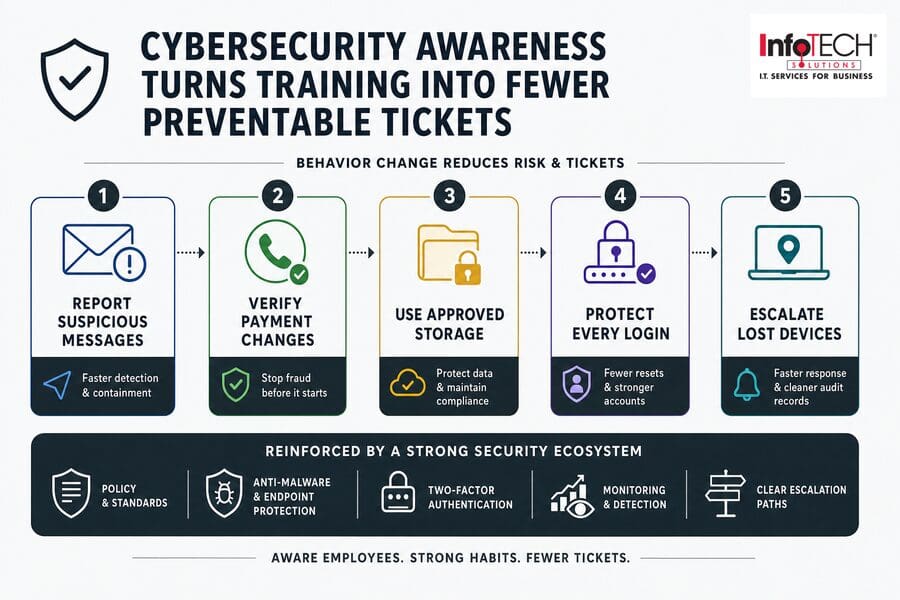
Employees are serving customers, meeting deadlines, and moving approvals forward. A managed cybersecurity awareness program should make the safest path the easiest path, supported by policy, anti-malware, two-factor authentication, monitoring, and clear escalation. That matters because 71% of surveyed working adults admitted risky actions such as password sharing, clicking unknown links, or handing over credentials, while organizations with effective SAT programs are 8.3 times less likely to appear on public data breach lists annually.
-
Report suspicious messages: Give employees one path to report phishing, invoice changes, and unusual login prompts so the helpdesk can contain issues faster.
-
Verify payment changes: Require a phone call or approved portal before changing vendor banking details.
-
Use approved storage: Keep contracts, customer files, and regulated data in managed platforms, not personal email or unmanaged drives.
-
Protect every login: Reinforce two-factor authentication and password hygiene to reduce reset tickets and exposed accounts.
-
Escalate lost devices: Fast reporting supports encryption checks, remote response, and cleaner audit records.
More Cybersecurity Risk Reads
Planning Cybersecurity Efforts During Awareness Month Needs Measurable Controls
Awareness has to become evidence of IT leadership and IT can review. The goal is a clearer record of which controls work across users, endpoints, email, backups, and cloud platforms, plus which exceptions need approval, remediation, or budget.
-
Two-factor authentication coverage: Document where IT/365 Two Factor Authentication is required and where exceptions remain.
-
Endpoint protection and encryption: Verify IT/365 Anti-Malware and Anti-Virus coverage, plus Encryption for PCs, across laptops used for payroll, sales, and field work.
-
Backup success and restores: Track IT/365 MSP Backup failures, test restores, and document recovery expectations.
-
Email filtering and archiving: Use Email Filtering, Messaging Protection and Archiving to support phishing review, legal holds, and compliance requests.
-
Threat hunting and monitoring: After preventive controls are in place, IT/365 Threat Hunting and 24/7/365 monitoring help detect suspicious activity that still reaches a device or account.
Measurable controls also need strategic ownership. Tie risk assessments, cloud protection, business continuity planning, and vCIO guidance to the systems, users, and recovery steps that affect daily operations.
Turn Awareness Into Risk Controls
Use Cybersecurity Awareness Month to find gaps in access, backups, policies, and user behavior. infoTECH Solutions can help you prioritize next steps.
Follow Through After Awareness Month With Expert Cybersecurity Support
Follow-through determines whether the work becomes safer operations or another checklist. Use the next planning cycle to assign owners, update tickets, document exceptions, and connect priorities to budget, compliance, insurance requests, and long-term IT decisions.
-
Assign risk owners: Name the person responsible for each unresolved access, vendor, or backup item.
-
Confirm control coverage: Check two-factor authentication, anti-malware, encryption, and backup coverage.
-
Test recovery decisions: Restore sample files and documents who approve disaster recovery steps.
-
Refresh employee training: Update guidance for phishing, payment changes, remote work, and lost devices.
-
Use strategic guidance: Pair vCIO and TAM planning with budgets, audit needs, cloud protection, and business continuity.
Better security depends on clear risk visibility, trained users, monitored systems, and documented controls. Contact infoTECH Solutions for cybersecurity consulting, managed IT support, risk assessments, 24/7/365 monitoring, threat hunting, backups, cloud protection, and practical next steps.
We are an MSP Cyber Verify™ AA Rated company with an A+ accreditation from the Better Business Bureau, and we pair vCIO and TAM guidance with plans that are flexible to your unique needs so we focus on what you actually need.